Unbeatable Value: The Most Reliable Used Compact SUVs Under $15,000

Unbeatable Value: The Most Reliable Used Compact SUVs Under $15,000

The quest for a dependable vehicle on a tight budget often leads buyers directly to the compact SUV segment. These vehicles offer the perfect blend of utility, comfortable size, and reasonable fuel economy. However, keeping the purchase price under $15,000 means focusing relentlessly on reliability, as the cost of unexpected repairs can quickly wipe out any initial savings.

The good news is that this budget opens the door to several excellent model years from brands renowned for their longevity. We’ve compiled the top contenders—the models that offer the best long-term value, fewer headaches, and a reputation for hitting high mileage milestones.

The Japanese Reliability Titans

When searching for the most reliable used compact SUVs under $15,000, the conversation must begin with the segment’s two Japanese stalwarts. To fit this budget in 2025, you’ll generally be targeting model years from the mid-2010s (e.g., 2014–2017) with typical mileage between 80,000 … Read More ...

The Lesser of Two Evils? Lithium Mining's Environmental Impact vs. Fossil Fuels

The Lesser of Two Evils? Lithium Mining’s Environmental Impact vs. Fossil Fuels

The global push for electric vehicles (EVs) is largely driven by the urgent need to mitigate climate change by reducing greenhouse gas emissions. However, the environmental footprint of EVs isn’t zero. A significant point of concern, particularly for critics, is the environmental impact of lithium mining for electric vehicle batteries. While crucial for the energy transition, it’s essential to put this impact into perspective when compared to the well-documented, catastrophic effects of fossil fuels.

The Environmental Impact of Lithium Mining

Lithium, a critical component of most EV batteries, is primarily extracted through two main methods:

  1. Hard-rock Mining: This involves traditional open-pit mining to extract lithium-bearing minerals (like spodumene).
    • Impacts: Habitat destruction, landscape alteration, dust pollution, large energy consumption (for crushing and processing ore), and waste rock generation. It also requires significant water.
  2. Brine Extraction (from Salt Flats): Lithium-rich brine is pumped from underground reservoirs and left to evaporate
Read More ...
The Power Struggle: Distinguishing Symptoms of a Bad Alternator vs. Dead Battery

The Power Struggle: Distinguishing Symptoms of a Bad Alternator vs. Dead Battery

When your car refuses to start or stalls unexpectedly, the immediate fear is often a major mechanical failure. However, the root cause is frequently traced back to the heart of the vehicle’s electrical system: the alternator or the battery. These two components work in tandem—the battery provides the initial surge of power to start the engine, and the alternator then charges the battery and powers all electrical accessories while the engine runs.

Because a failing alternator will eventually drain a healthy battery, and a dead battery can mask a good alternator, the symptoms often overlap, leading to misdiagnosis. Knowing how to distinguish the symptoms of a bad alternator vs. a dead battery is crucial for timely and cost-effective repair.

Symptoms of a Dead Battery (Starter Failure)

A dead battery is generally the simpler problem to diagnose and fix. It usually results from age, cold weather, or accidentally leaving lights … Read More ...

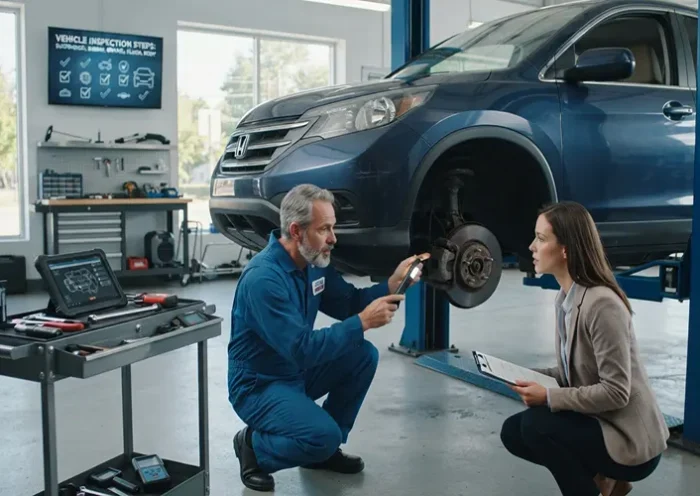
The Deep Dive: Hidden Mechanical Problems Uncovered by a Pre-Purchase Inspection (PPI)

When buying a used car from a private seller, the Pre-Purchase Inspection (PPI) is your final, critical defense against inheriting a money pit. While your walk-around and test drive can catch obvious issues, only an independent mechanic with the right tools can reveal the systemic, costly problems that sellers—consciously or unconsciously—may hide.

Here are the most common and expensive mechanical problems that a PPI specifically looks for:

1. Transmission Issues (The Silent Killer)

Transmission failure is one of the costliest repairs a car can face. Sellers might temporarily mask early signs, but a mechanic can spot subtle warnings.

  • What the PPI Uncovers:
    • Fluid Condition: Checking the transmission fluid (if possible) for a dark, burnt smell or metallic particles, which indicate internal wear and overheating.
    • Gear Engagement: Detecting subtle hesitation, jerking, or delayed shifts that might not appear during a short, gentle test drive.
    • Hidden Codes: Using a diagnostic scanner
Read More ...
Beyond the Wheel: Demystifying SAE Level 3 vs. Level 4 Autonomous Driving

Beyond the Wheel: Demystifying SAE Level 3 vs. Level 4 Autonomous Driving

The landscape of autonomous driving is often characterized by ambitious promises and evolving terminology. At its core, the industry relies on the SAE (Society of Automotive Engineers) International standards to classify levels of driving automation, ranging from Level 0 (no automation) to Level 5 (full automation in all conditions). Among these, the distinction between SAE Level 3 and Level 4 autonomous driving technology is particularly crucial, representing a significant leap in technological capability and, more importantly, a fundamental shift in the driver’s role and responsibility.

Both Level 3 and Level 4 systems are considered “conditional automation,” meaning the automated driving system (ADS) performs all dynamic driving tasks under certain conditions. However, the critical difference lies in the driver’s intervention requirement and the system’s ability to handle failure.

SAE Level 3: Conditional Automation (Eyes Off, Still Alert)

At SAE Level 3, the ADS can manage all aspects of driving (steering, … Read More ...